
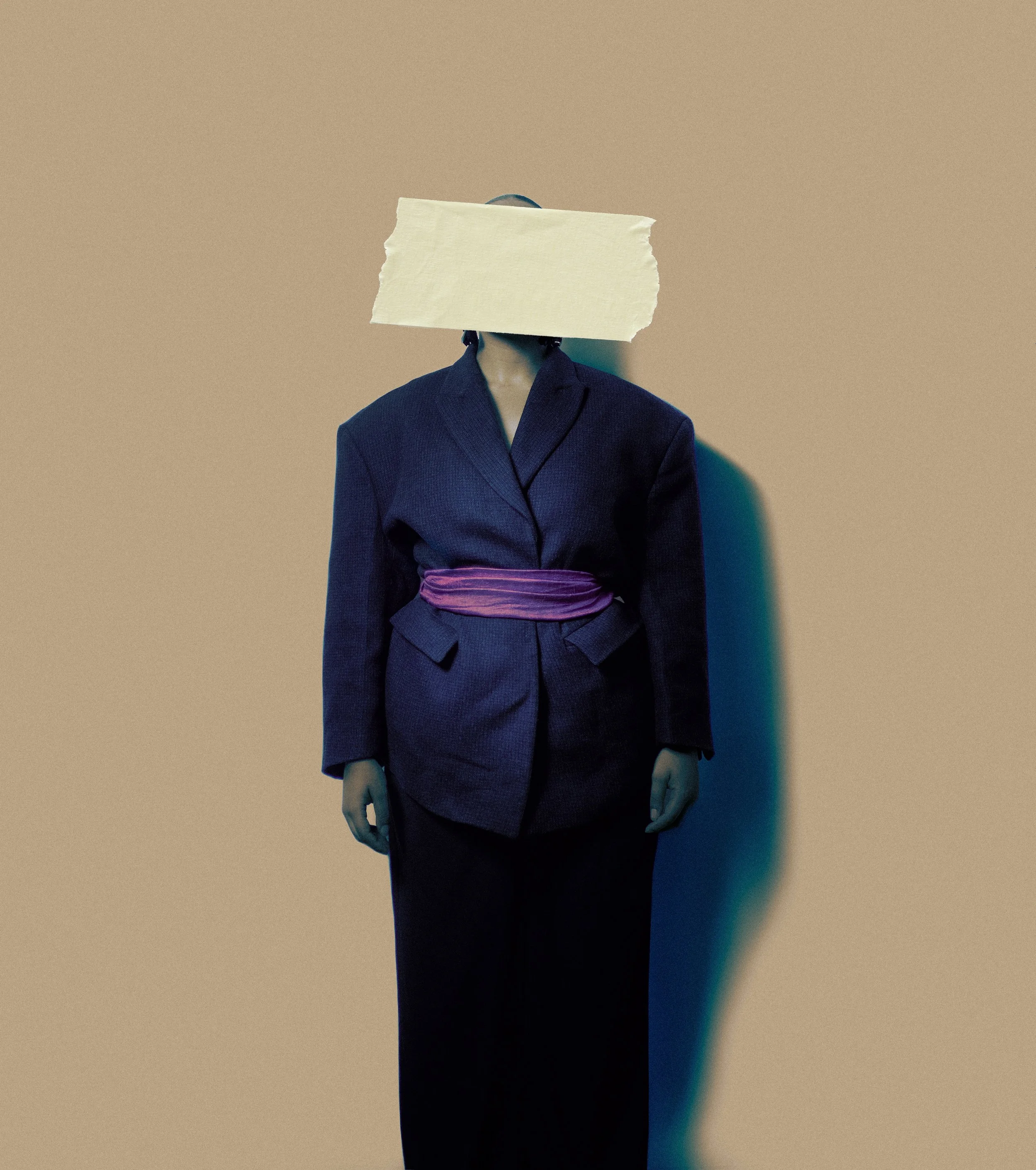
A blazer. Wide-leg trousers. A waistcoat.
Few garments have carried as many contradictions as the women's suit. For some, it is the ultimate symbol of liberation. A woman borrowing the codes of masculinity to enter spaces that were once denied to her. For others, it represents something less romantic: the acceptance of a world built around productivity, hierarchy and work. A uniform that promises power while asking women to adapt to structures that were never designed for them.
Perhaps that is why the suit has never stopped evolving.
Its history stretches back further than many imagine. Throughout the nineteenth century, women's clothing was designed less for movement than for display. Corsets reshaped the body. Crinolines expanded it. Layers of fabric turned elegance into restriction. Clothing communicated class, respectability and femininity before it communicated comfort.
The first real disruption came in the mid-1800s with Amelia Bloomer, an American women's rights activist who popularised loose trousers worn beneath a shortened skirt. The garment became known as the Bloomer costume. It caused outrage. Newspapers mocked it relentlessly, and critics argued that abandoning traditional dress threatened the natural order of society. The clothes themselves were never the real issue. What unsettled people was the possibility that women might claim greater physical and social freedom. The debate surrounding Bloomers became inseparable from the early women's rights movement. It wasn't simply about trousers; it was about mobility, autonomy and visibility.

Amelia Bloomer — (I would call it women destiny to have this name)
“The costume of women should be suited to her wants and necessities. It should conduce at once to her health, comfort, and usefulness; and, while it should not fail also to conduce to her personal adornment, it should make that end of secondary importance”
Decades later, tailoring returned with greater force.
In the 1920s and 1930s, women such as Marlene Dietrich and Katharine Hepburn transformed the masculine suit into something undeniably glamorous. It no longer belonged exclusively to businessmen. It became an aesthetic statement, a refusal to accept that femininity could only be expressed through dresses.
Then came Yves Saint Laurent.
When Le Smoking debuted in 1966, it did more than introduce a tuxedo for women. It challenged the idea that elegance itself belonged to men. At a time when some restaurants still refused entry to women wearing trousers, the tuxedo became quietly revolutionary. It suggested that authority could look different. And yet liberation has always been complicated.
Today, the suit is everywhere.
It has become the unofficial uniform of the modern working woman. Walk through any financial district and you'll find endless variations of oversized blazers, sharp shoulders and tailored trousers. The silhouette communicates competence almost instinctively, but it also raises to me an uncomfortable question.
Have women claimed the suit? Or has the suit claimed women?
The office aesthetic has become one of fashion's favourite fantasies and let’s not talk about the red lipstick… ( writing something about it by the way ). Saint Laurent's Spring/Summer 2025 collection perfectly captured this tension. Anthony Vaccarello sent models down the runway in broad shoulders, cinched waists and exaggerated tailoring that echoed executive dressing while pushing it into the realm of desire. It wasn't corporate clothing. It was corporate mythology. Office wear became luxury, aspiration and spectacle all at once.
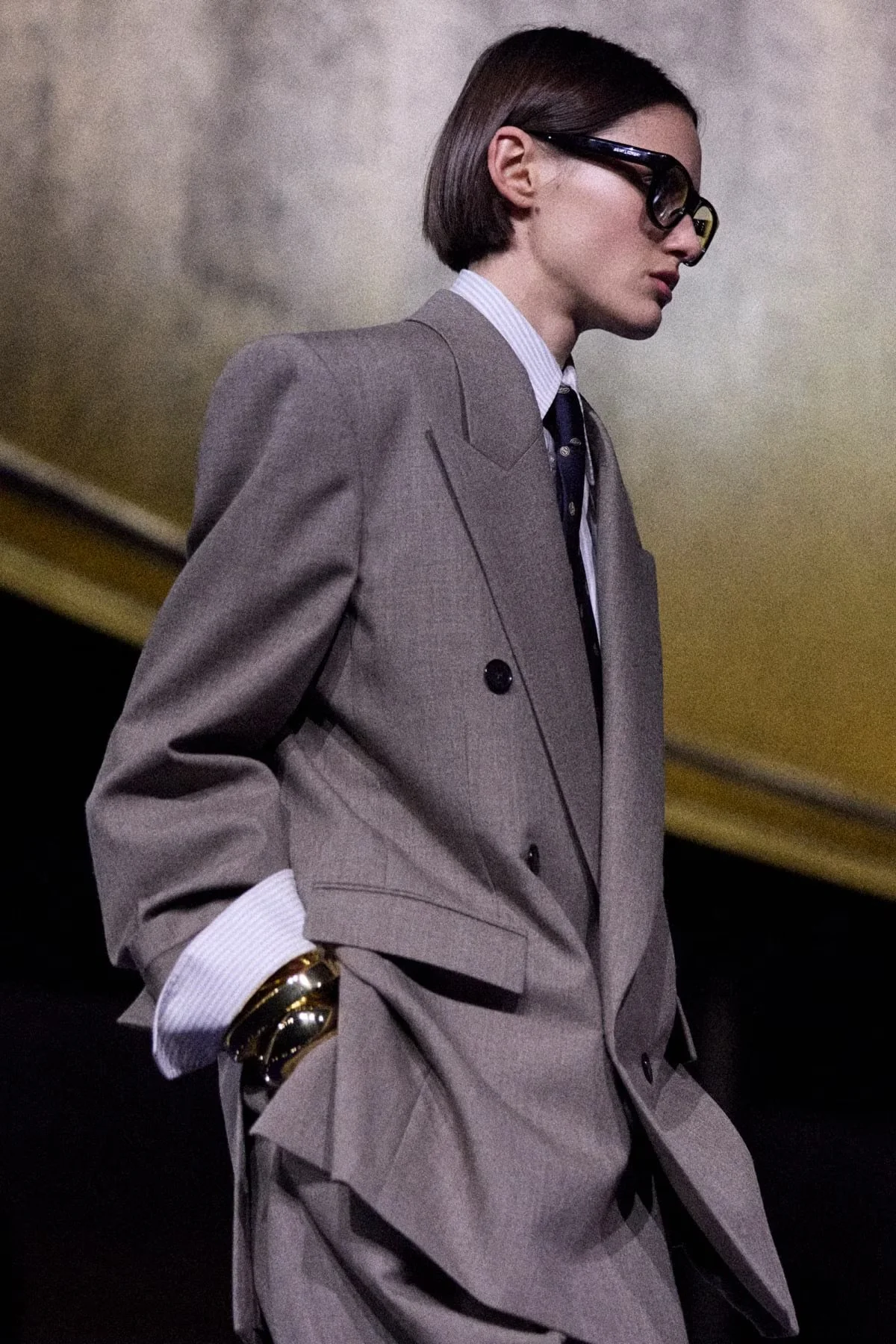
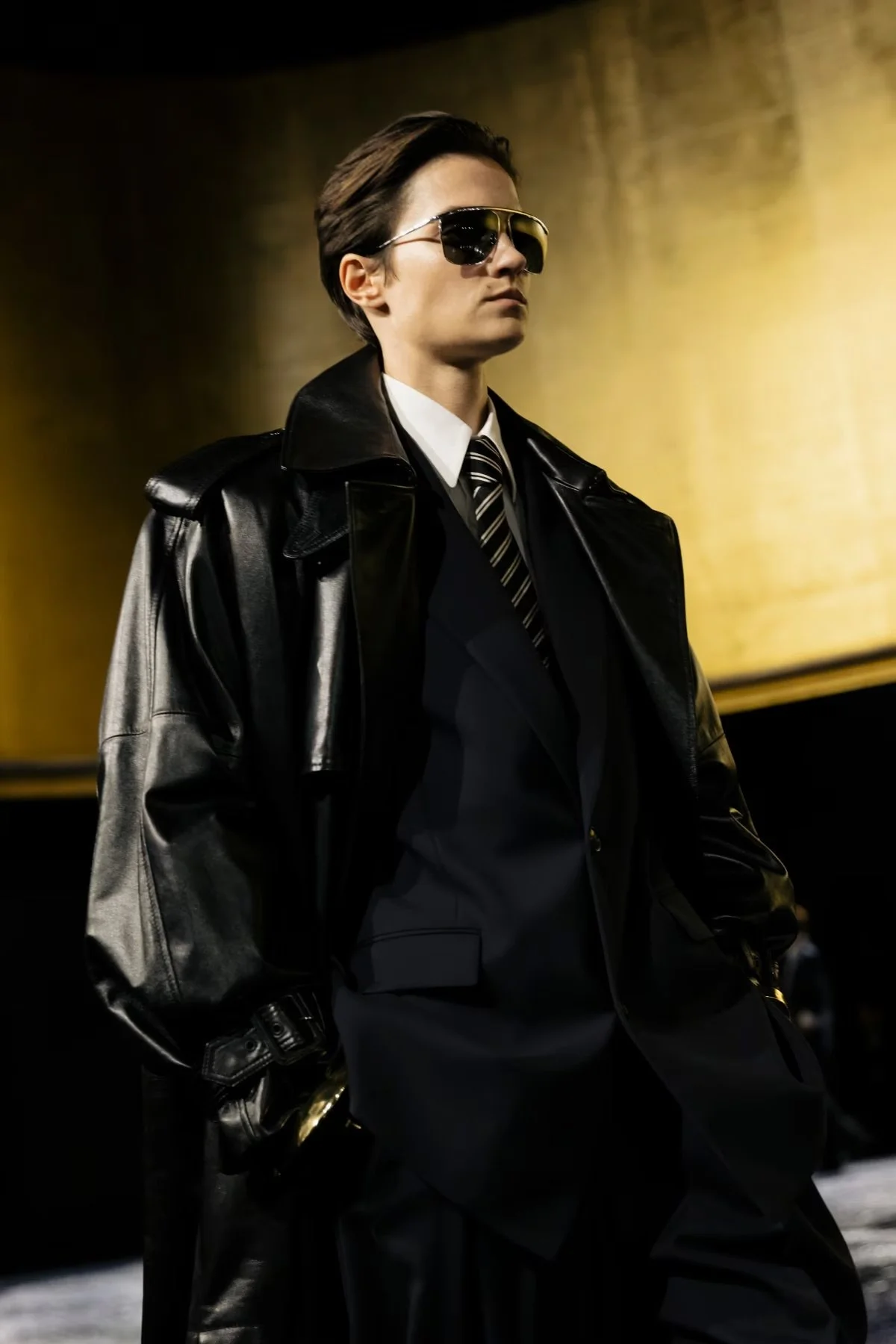
"Office siren."
"Corporate core."
"Power dressing."
The internet invents new names every season, but the fascination remains the same, a lot of people continue to romanticise work through clothing. Even I sometimes… I am sure because clothing has always allowed us to perform versions of ourselves before we've fully become them. Usually, what we wear is the first thing people notices, it's like a more or less accurate translation of ourselves.
This is where my own relationship with tailoring becomes complicated.
I love a good suit.
A waistcoat. An oversized jacket. Wide trousers that almost graze the floor, I wear them because they make me feel confident, elegant and strangely comfortable in my own body. Does that mean I'm celebrating capitalism? I don't think so. Nor do I believe that every woman wearing tailoring is aspiring to become another executive climbing another corporate ladder. Sometimes a blazer is simply a blazer. Sometimes it is just beautiful. and that’s Okay ! I believe that fashion and clothings in general were always been more generous than the ideologies we project onto it. But it can still be debated…
When I wear a suit, I rarely wear it the way it was intended. The jacket grows too large. The shirt is left half-unbuttoned. Jewellery softens the severity. Sometimes it's a dramatic lip, sometimes a pair of oversized earrings, sometimes pleats that refuse to be disciplined by the structure of the clothes. The silhouette becomes mine rather than the office's. Perhaps that is fashion's most interesting strength.
Not that it’s in search of modifying and running away from history, but that it allows us to rewrite it or rather, to continue writing it, one outfit at a time. The women's suit will probably never stop carrying contradictions.
It speaks the language of power while remembering oppression.
It symbolises freedom while resembling a uniform.
It can represent ambition, rebellion, conformity or self-expression, sometimes all within the same outfit.
Maybe the question was never whether women should wear the suit, maybe the question is whether any garment can ever escape the systems that produced it.
I'm not sure it can, but I do know this… When it will be a good sunny and fresh morning, I'll probably wear my oversized blazer anyway. Not because I want to perform productivity, but because, somewhere between history and personal style, it has become my own.
